Student Categories in Practice School
- “Fifth year”: MIT S.B. students accepted into Practice School
- “Terminal Master’s”: B.S. students who apply to MIT solely to attend Practice School
- Ph.D./Sc.D. or Ph.D.CEP: students in MIT doctoral programs
Fifth year and terminal Master’s students can typically complete the M.S.CEP degree in one calendar year.
M.S.CEP Degree Requirements
The degree requires two semesters of coursework. All chemical engineering graduate students at MIT share the same core curriculum, which covers:
- Thermodynamics
- Transport phenomena
- Reactor engineering
- Systems engineering
Once coursework wraps up, students familiarize themselves with the available stations before submitting their ranked preferences. Placement decisions take into account each student’s interests, the program’s learning goals, the needs of individual projects, and how many students a station can accommodate. Students relocate to their assigned Practice School Stations, which are based at host companies. Groups of six to ten students remain at a given station for two months before rotating to a second station for another two-month stint (during the shorter summer term, one of the two stations runs for just one month instead). While at a station, students are divided into smaller teams of two or three to tackle projects that last about a month each. Over the course of the program, students work alongside a range of different classmates and take a turn leading a team once or twice.
During Practice School, students are not company employees; they are enrolled in a course and are graded on their performance. The MIT Station Director evaluates each student’s technical ability, communication skills, leadership, and professionalism. The Director also helps prepare the projects, guides the students’ work, and assists in locating resources and solving problems.
During the course of each project, student teams are required to prepare three formal talks, a short scope of work, and a final report documenting the work, all within a tightly controlled, four-week time period.
Host companies pose project topics, and students pursue them using company resources at an intensive pace with ambitious objectives.
Types of Projects
Topics cover a surprisingly wide array within even a single company, including:
- Solving an operating problem in the plant
- Identifying production limitations in a process
- Preliminary design and cost estimation for a new process
- Developing a new engineering method for a specific task
Methods & Tools
Depending on the project, students may be:
- Conducting laboratory work
- Surveying technical literature
- Developing mathematical models
- Analyzing production data
- Deploying computational tools
- Interviewing plant operators or reviewing plant procedures
What Students Develop
Working on projects builds a broad range of skills:
- Technical problem-solving
- Planning and organization
- Teamwork and leadership
- Oral and written communication of technical material
In short, students will be exercising full skills as a chemical engineer.
While resident at the stations, students are paid a normal graduate student stipend and their tuition costs are covered. Housing, usually in attractive apartments, costs approximately the same as what students pay while residing at MIT. Rental cars, one per project team, solve transportation problems after the long hours of work.
Diversion & Recreation
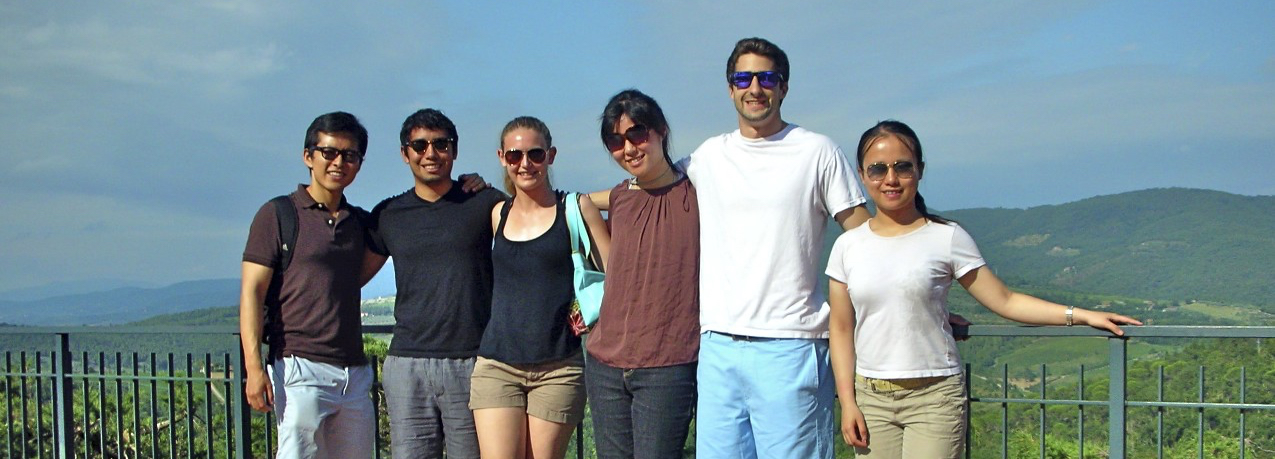
Practice School isn’t all work. Weekends offer a break from the intensity of project work, with activities shaped by station location, class preferences, and season.
Activities
Recreational options have included:
- Outdoor sports: skiing, hiking, canoeing, rafting, bicycling, windsurfing, deep-sea fishing
- Touring local attractions, such as a Kyoto shrine or a European castle
- Casual social activities like organizing a soccer game or trying a new restaurant
Culture & Camaraderie
Students experience the cultural diversity of their host location through local food, art, and landscape. This close personal and professional interaction typically forges a unique bond among students and directors, one that lasts long after the program ends.
Fikile R. Brushett
Ralph Landau Professor of Chemical Engineering Practice & Director of the Practice School
Room 66-370A
brushett@mit.edu
Amanda Bendzel
Senior Administrative Assistant
Room 66-370
abendzel@mit.edu