

Biophysics and Modeling Approaches for Development of Effective Downstream Bioprocesses of Complex Biological Products
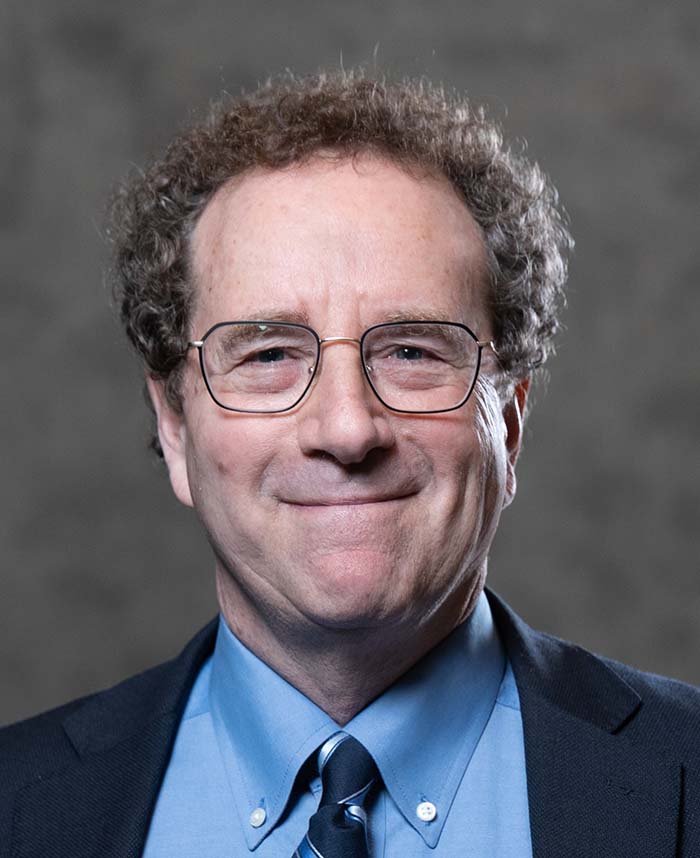 Steven M. Cramer
Institute Professor
Rensselaer Polytechnic Institute
Friday, November 20, 2026
3:00 p.m. in Room 66-110 (2:30 p.m. Reception)
Massachusetts Institute of Technology
[Poster]
Abstract
The wide range of biological products in development in BioPharma has created intense pressure to rapidly develop efficient bioprocesses. For downstream engineers, this often results in the need to solve complex separation problems, often with bioproducts with less-than-ideal developability characteristics. This talk will exam the interplay between in silico modeling tools and high throughput experimentation to expedite process development for the purification of protein-based therapeutics and for the development of novel bioseparations materials and processes for advanced therapeutic medical products. The first part will focus on protein therapeutics and will illustrate how a combination of biophysics, simulations and analytical tools can be employed to identify preferred binding domains and for understanding the molecular basis for the purification of protein therapeutics from process and product related impurities. This will include protein surface footprinting using covalent labeling/ LC-MS analysis in concert with course grained simulations. A fully in-silico approach will also be presented for rapidly identifying the preferred binding domains/patches on proteins and for using this data to rapidly develop predictive models. AI based approaches for learning 3D protein surface embeddings for both protein property and separation predictions will also be discussed. The second part will discuss downstream processing for gene therapy products including AAV, LVV and mRNA. The unique challenges of product definition and the removal of very similar product related impurities in these systems will be addressed using chromatographic and non-chromatographic approaches such as affinity precipitation and rapid aqueous 2 phase/membrane hybrid systems. Finally, some comments on the implications of these advances for continuous and integrated bioprocessing will be presented.
Bio
Steve Cramer is an Institute Professor at Rensselaer Polytechnic Institute. His laboratory develops models, materials, and processes to make downstream bioprocessing more effective for the purification of biological products. He is a member of the National Academy of Engineering, UT Austin’s Academy of Distinguished Chemical Engineers and an elected fellow of AAAS, AIChE, ACS and AIMBE. He has won numerous awards, including the Gordon Prize from the NAE, the ACS Separations Science and Technology Award, the BIOT Division’s Michael’s Award, the Gaden Award from Biotechnology and Bioengineering, the Wiley Distinguished Faculty Award and the School of Engineering Outstanding Professor and Research Excellence Awards from RPI. His inventions and models have been employed by numerous companies and he is active on industrial scientific advisory boards. The 65 PhD graduates from the Cramer lab have had a significant impact, with many former students now playing key leadership roles in the state of the art of industrial bioprocessing at major biopharmaceutical and bioseparations companies worldwide as well as in academia.